
You are using an out of date browser. It may not display this or other websites correctly.
You should upgrade or use an alternative browser.
You should upgrade or use an alternative browser.
Your slip is showing: Γλωσσικές και μεταφραστικές γκάφες (και μικρολαθάκια)

cougr
¥
I tend to agree, pontios.
The only viable context for 'extenuating conversation' is one where the conversation itself functions as a mitigating factor, or as shorthand for the legal (or other) discussion and analysis of those factors.
I could probably think of some other highly stylized, archaic uses of the term - though none of which apply to the autopsy situation.

pontios
Well-known member
It's most likely a malapropism.
The fact that people confuse extraneous and extenuating in the other direction (your last post documenting extraneous circumstances) suggests this is a slip, not a stylistic use ... and I agree that the archaic interpretations are probably the least plausible.
The fact that people confuse extraneous and extenuating in the other direction (your last post documenting extraneous circumstances) suggests this is a slip, not a stylistic use ... and I agree that the archaic interpretations are probably the least plausible.

m_a_a_
Well-known member
I'm not saying it's an apt choice of words by any means.
Here's what I found:
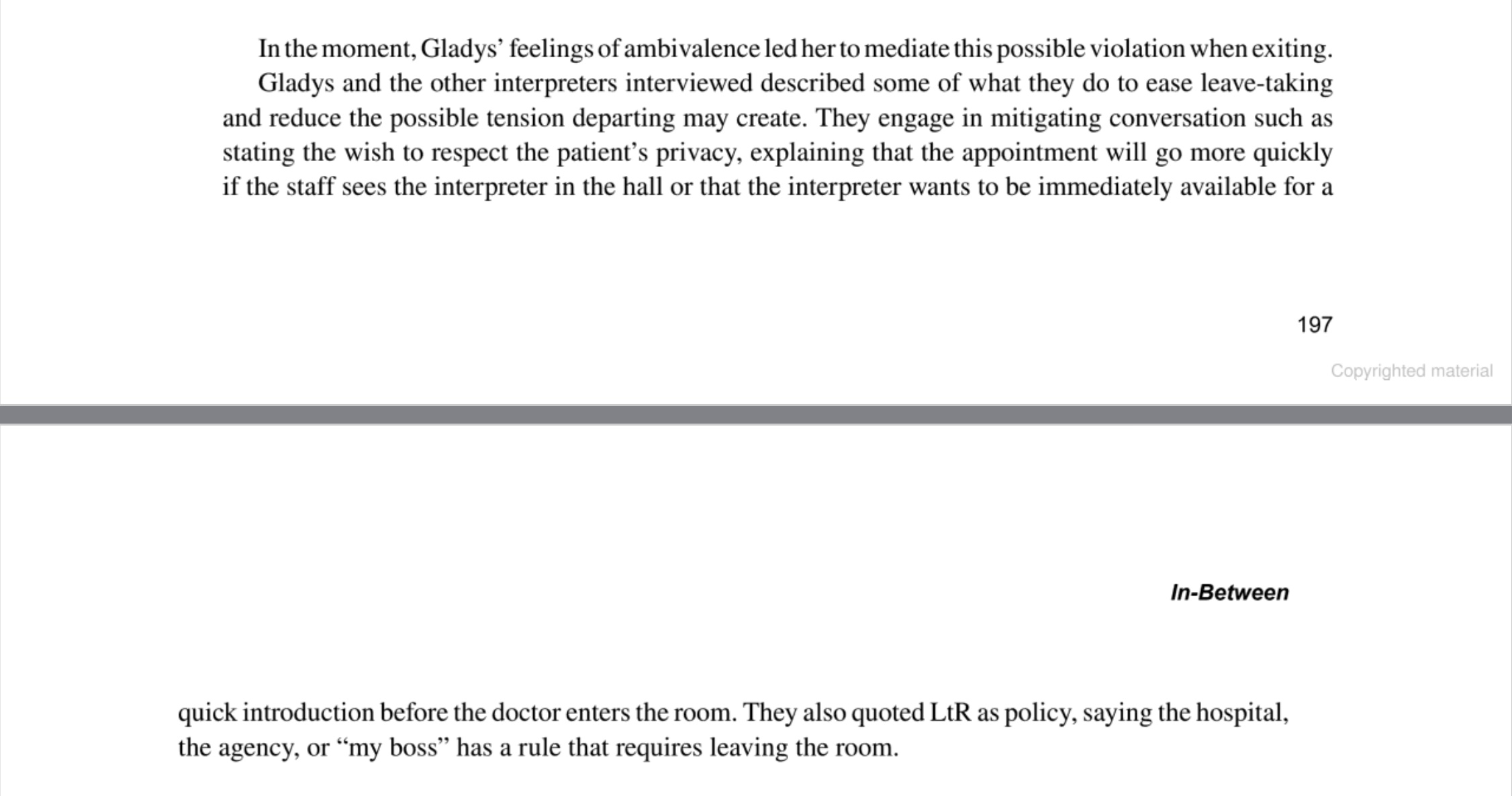
…and…
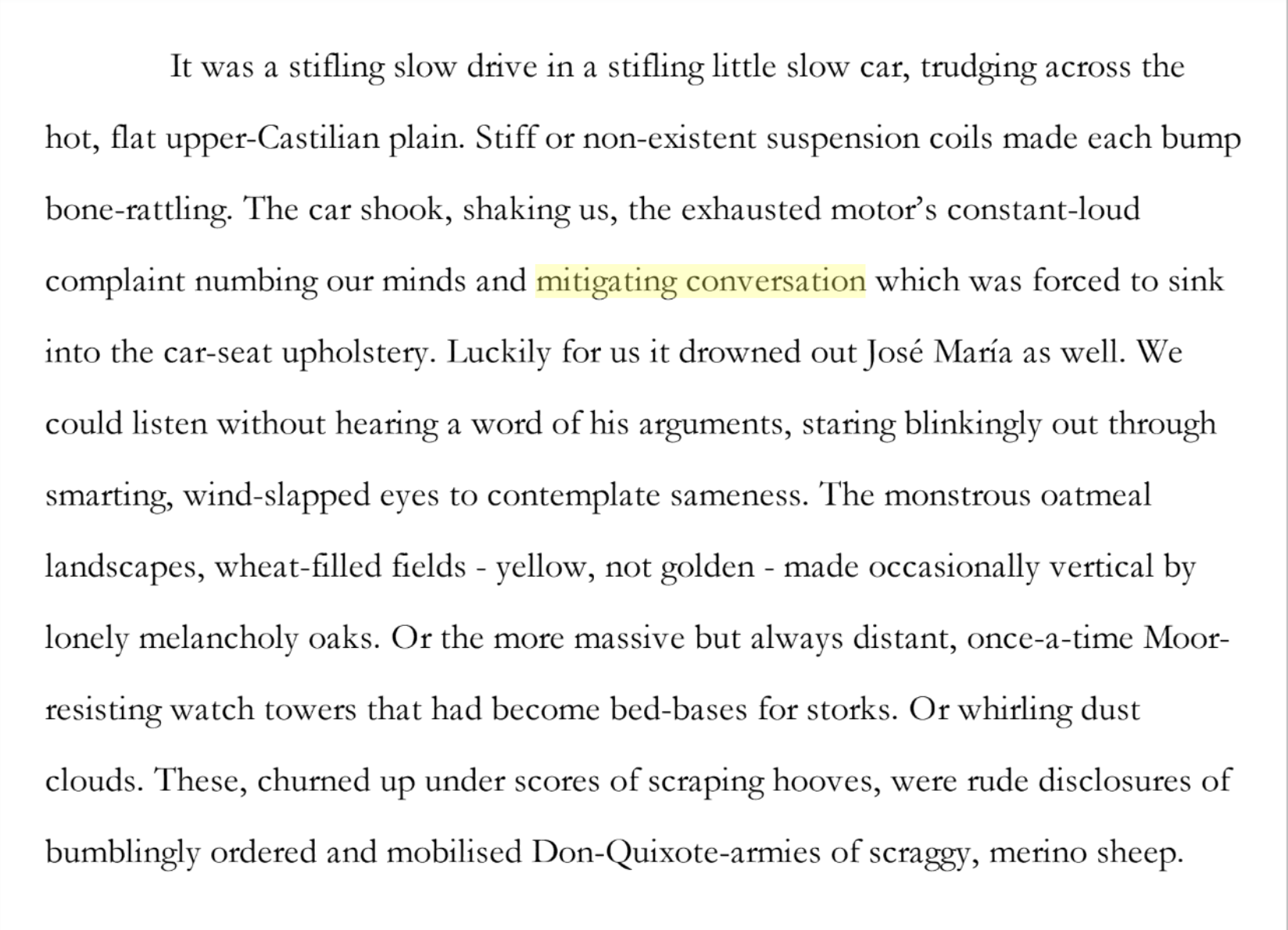
First one is from the Handbook of Research on Medical Interpreting, by possibly non-natives Souza, Izabel E.T. de V. and Fragkou, Effrossyni (Effie); second one, though, is from a book called Purgatory by British author Paul David Adkin (whom I'm not familiar with).
My point being: yes, I perfectly understand that the collocation "extenuating conversation" is nothing short of weird, and I'm not confident enough to reach a verdict on whether "mitigating", "alleviating" or something else along those lines would be the more natural adjective, but I do get the point. And extraneous is in my eyes just too generic. Of course the talk is gonna be irrelevant if it's meant to extenuate the mood (which, by the way, I take to be the –implicit– object). But the point is to describe the purpose of the conceived conversation, not its content.
I'm reading this, more or less, like: "There is no attempt to extenuate (through chit-chat) what we were doing: we're cutting up corpses (of celebrities we're fond of).'There is no other extenuating conversation going on in the room, compared to other cases that I have worked on,' remembers Ciaccio. 'In all my years of doing autopsies and everything, this was probably one of the most solemn I was ever a part of.'
This one triggered my curiosity a tad, and I googled "mitigating conversation", but then I narrowed the search down to books.Good to know: Some student forums use the term extraneous circumstances, but for official forms, you’ll need “extenuating” or “mitigating.”
Here's what I found:
…and…
First one is from the Handbook of Research on Medical Interpreting, by possibly non-natives Souza, Izabel E.T. de V. and Fragkou, Effrossyni (Effie); second one, though, is from a book called Purgatory by British author Paul David Adkin (whom I'm not familiar with).
My point being: yes, I perfectly understand that the collocation "extenuating conversation" is nothing short of weird, and I'm not confident enough to reach a verdict on whether "mitigating", "alleviating" or something else along those lines would be the more natural adjective, but I do get the point. And extraneous is in my eyes just too generic. Of course the talk is gonna be irrelevant if it's meant to extenuate the mood (which, by the way, I take to be the –implicit– object). But the point is to describe the purpose of the conceived conversation, not its content.
cougr
¥
Even if we were to accept the premise of an 'implicit object,' an atmosphere or a mood cannot be extenuated because a mood carries no moral culpability to be mitigated.You could perhaps say "attenuate the mood", though it's not that typical either.And extraneous is in my eyes just too generic. Of course the talk is gonna be irrelevant if it's meant to extenuate the mood (which, by the way, I take to be the –implicit– object). But the point is to describe the purpose of the conceived conversation, not its content.
Furthermore, dismissing 'extraneous' as too generic misses the structural context of the quote. The medical examiner clearly stated that they 'discuss only what is essential' in the sentence beforehand.
So, it's not so much a generic descriptor in this case but rather it perfectly matches and builds on the context of the previous sentence (which specifies that the team only discusses what is 'essential).
.
Last edited:
cougr
¥
In my haste (I had a μνημόσυνο to go to), I forgot to mention the use of the word "other" which was used in the passage.
"They discuss only what is essential. There is no otherextenuating extraneous (non-essential) conversation..."
Replacing "extenuous" with "extraneous", "other extraneous" smoothly links back to the essential discussion.
If the author genuinely intended to shift focus from content (essential) to purpose ("extenuating" the mood), they could not syntactically use the word "other" to connect them. To say "there was no other extenuating conversation" implies that the essential discussion mentioned right before it was also an extenuating conversation.
Edit: Pontios, had also alluded to this earlier on.
"They discuss only what is essential. There is no other
Replacing "extenuous" with "extraneous", "other extraneous" smoothly links back to the essential discussion.
If the author genuinely intended to shift focus from content (essential) to purpose ("extenuating" the mood), they could not syntactically use the word "other" to connect them. To say "there was no other extenuating conversation" implies that the essential discussion mentioned right before it was also an extenuating conversation.
Edit: Pontios, had also alluded to this earlier on.
Last edited:
cougr
¥
Σε κάθε περίπτωση, όποια κι αν ήταν η πραγματική πρόθεση του ομιλητή, δεν έχει και τόσο μεγάλη σημασία. Το σημαντικό είναι ότι συμφωνούμε και οι δύο πως η επιλογή των λέξεων ήταν εντελώς άστοχη.I'm not saying it's an apt choice of words by any means.

Από τα ωραία που διαβάζει κανείς σε τοίχους του Facebook (και δεν αποκλείεται να έχει βάλει το χέρι του κάποιος αναιδής αυτόματος διορθωτής):
Και είναι όλοι υπερήφανοι που υποδέχονται όλους αυτούς και αυτές που περνούσαν το ΠΑΣΟΚ γενναίες δεκατέσσερις.
Αντιγράφω από τα Λόγια του αέρα του Ν. Σαραντάκου:
τον πέρασε γενεές δεκατέσσερις: τον έβρισε σκαιά, για πολλή ώρα, αυτόν και όλο του το σόι, υποτίθεται μέχρι τους απωτάτους προγόνους του. Από την «βίβλο γενέσεως» του Ιησού Χριστού (Ματθ., 1.1-17), που ξεκινάει «Αβραάμ εγέννησεν τον Ισαάκ» και, αφού παραθέσει πολλά ονόματα, συνοψίζει: «Πᾶσαι οὖν αἱ γενεαὶ ἀπὸ Ἀβραὰμ ἕως Δαυὶδ γενεαὶ δεκατέσσαρες, καὶ ἀπὸ Δαυὶδ ἕως τῆς μετοικεσίας Βαβυλῶνος γενεαὶ δεκατέσσαρες, καὶ ἀπὸ τῆς μετοικεσίας Βαβυλῶνος ἕως τοῦ Χριστοῦ γενεαὶ δεκατέσσαρες.»
(Την ώρα που διάβαζα τις «γενναίες», άκουγα σε κονσέρβα του Τροχού της τύχης κάποιον νεαρό παίκτη να λύνει γρίφο λέγοντας «ΑΛΕΚΑ ΒΟΥΓΙΟΥΚΛΑΚΗ». Δέχομαι πολλαπλά χτυπήματα.)