
You are using an out of date browser. It may not display this or other websites correctly.
You should upgrade or use an alternative browser.
You should upgrade or use an alternative browser.
Your slip is showing: Γλωσσικές και μεταφραστικές γκάφες (και μικρολαθάκια)

cougr
¥
I tend to agree, pontios.
The only viable context for 'extenuating conversation' is one where the conversation itself functions as a mitigating factor, or as shorthand for the legal (or other) discussion and analysis of those factors.
I could probably think of some other highly stylized, archaic uses of the term - though none of which apply to the autopsy situation.

pontios
Well-known member
It's most likely a malapropism.
The fact that people confuse extraneous and extenuating in the other direction (your last post documenting extraneous circumstances) suggests this is a slip, not a stylistic use ... and I agree that the archaic interpretations are probably the least plausible.
The fact that people confuse extraneous and extenuating in the other direction (your last post documenting extraneous circumstances) suggests this is a slip, not a stylistic use ... and I agree that the archaic interpretations are probably the least plausible.

m_a_a_
Well-known member
I'm not saying it's an apt choice of words by any means.
Here's what I found:
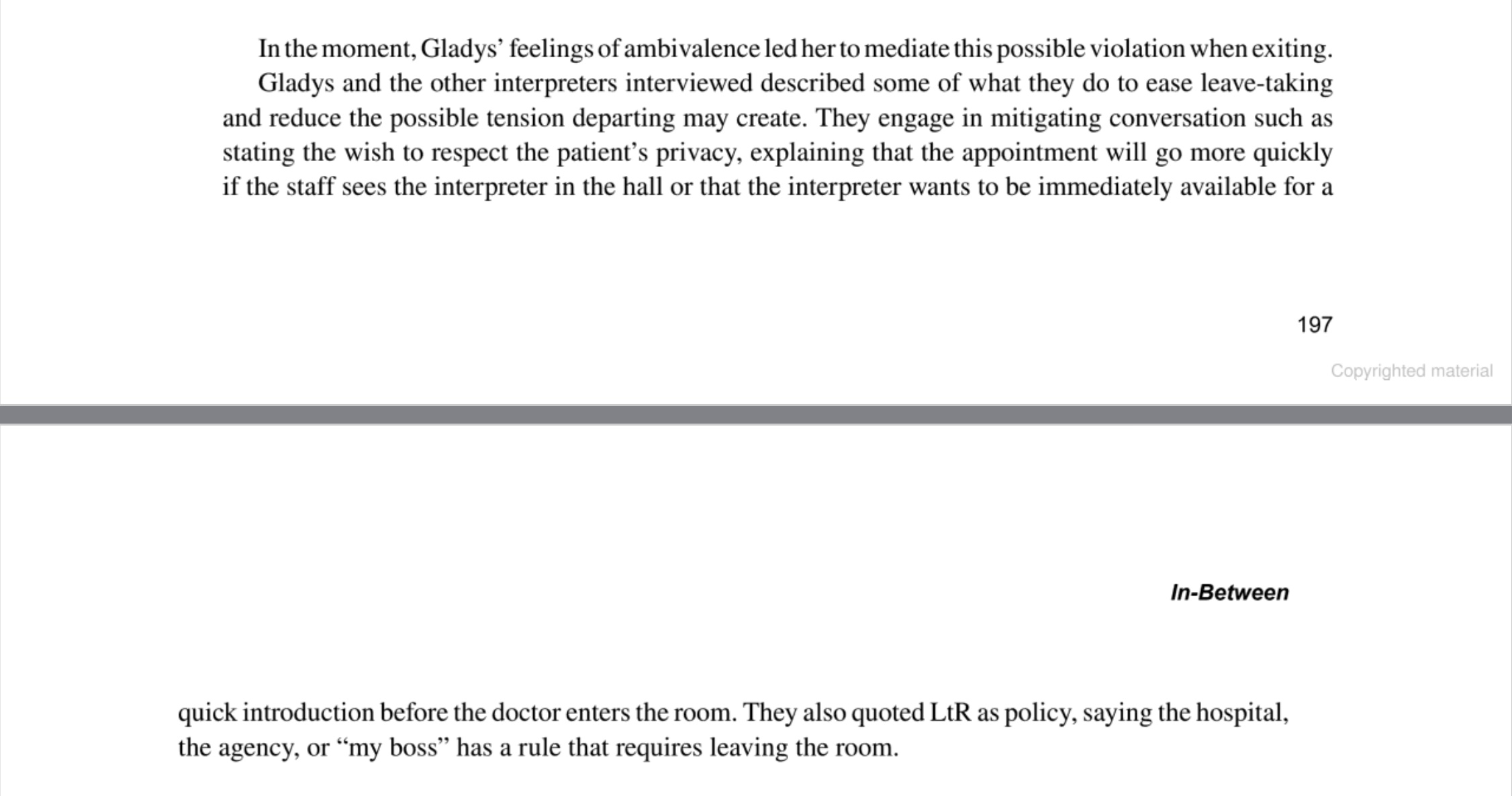
…and…
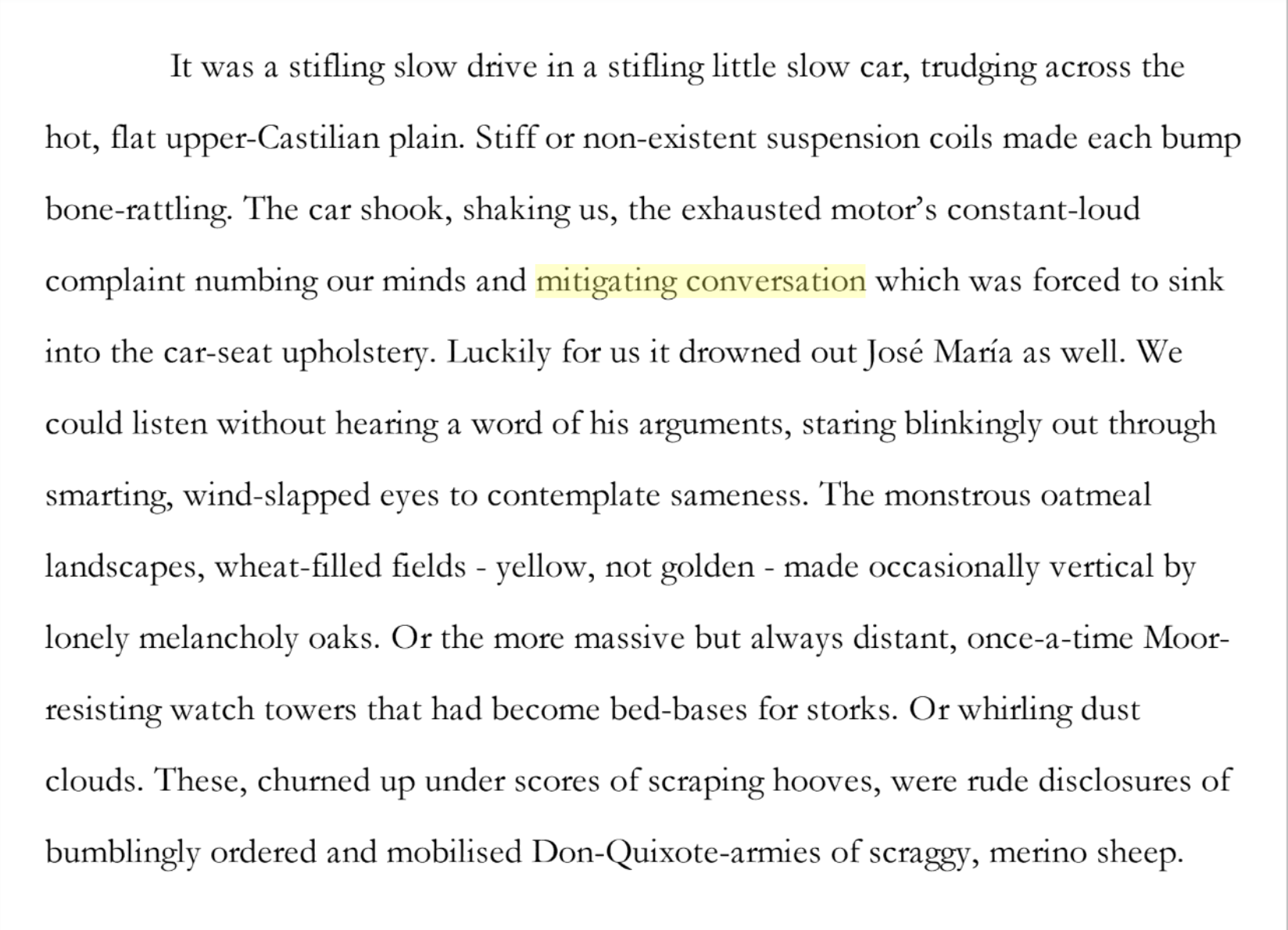
First one is from the Handbook of Research on Medical Interpreting, by possibly non-natives Souza, Izabel E.T. de V. and Fragkou, Effrossyni (Effie); second one, though, is from a book called Purgatory by British author Paul David Adkin (whom I'm not familiar with).
My point being: yes, I perfectly understand that the collocation "extenuating conversation" is nothing short of weird, and I'm not confident enough to reach a verdict on whether "mitigating", "alleviating" or something else along those lines would be the more natural adjective, but I do get the point. And extraneous is in my eyes just too generic. Of course the talk is gonna be irrelevant if it's meant to extenuate the mood (which, by the way, I take to be the –implicit– object). But the point is to describe the purpose of the conceived conversation, not its content.
I'm reading this, more or less, like: "There is no attempt to extenuate (through chit-chat) what we were doing: we're cutting up corpses (of celebrities we're fond of).'There is no other extenuating conversation going on in the room, compared to other cases that I have worked on,' remembers Ciaccio. 'In all my years of doing autopsies and everything, this was probably one of the most solemn I was ever a part of.'
This one triggered my curiosity a tad, and I googled "mitigating conversation", but then I narrowed the search down to books.Good to know: Some student forums use the term extraneous circumstances, but for official forms, you’ll need “extenuating” or “mitigating.”
Here's what I found:
…and…
First one is from the Handbook of Research on Medical Interpreting, by possibly non-natives Souza, Izabel E.T. de V. and Fragkou, Effrossyni (Effie); second one, though, is from a book called Purgatory by British author Paul David Adkin (whom I'm not familiar with).
My point being: yes, I perfectly understand that the collocation "extenuating conversation" is nothing short of weird, and I'm not confident enough to reach a verdict on whether "mitigating", "alleviating" or something else along those lines would be the more natural adjective, but I do get the point. And extraneous is in my eyes just too generic. Of course the talk is gonna be irrelevant if it's meant to extenuate the mood (which, by the way, I take to be the –implicit– object). But the point is to describe the purpose of the conceived conversation, not its content.